

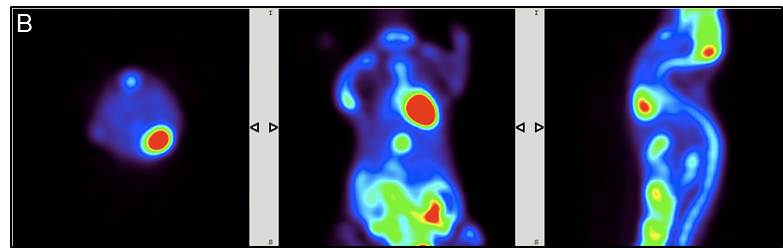
Left: SonoVue® microbubbles of around 15 μm filled with sulfur hexafluoride (SF6). Right: Biogenic gas-filled nanostructures

© Sheryl Roberts, So you think you can grow crystals in a beaker, 2014 all rights reserved.
How light interacts with matter Continue reading


The International FameLab 2013 kicks off FameLab Germany at the start of February next year in search for new science communicators and ambassadors around Europe. Helmholtz Zentrum München together with the British Council have organised the regional qualifying round on the 05th of March 2013 held at the Deutsches Museum.
HMGU’s young scientists and engineers are encouraged to participate and spread the message that science is for everyone. Register now if you’re brave enough to shed some light on your scientific topics to the wider public audience with the challenge of voicing this in only three minutes. This is great for those who are interested in public engagements, science communications, building your skills and would like to increase your network. Apparently, it’s the only competition where it crosses international boundaries. I’m rough around the edges and I’m definitely not on par so I’ll skip the 2013 competition but it will be worthwhile going to actively support and indirectly engage with my peers.
The three things to consider if you would like to be a participant: Content must be right, clear because you only have three minutes and charisma because it’s all about inspiring and motivating people.
Happy registering!
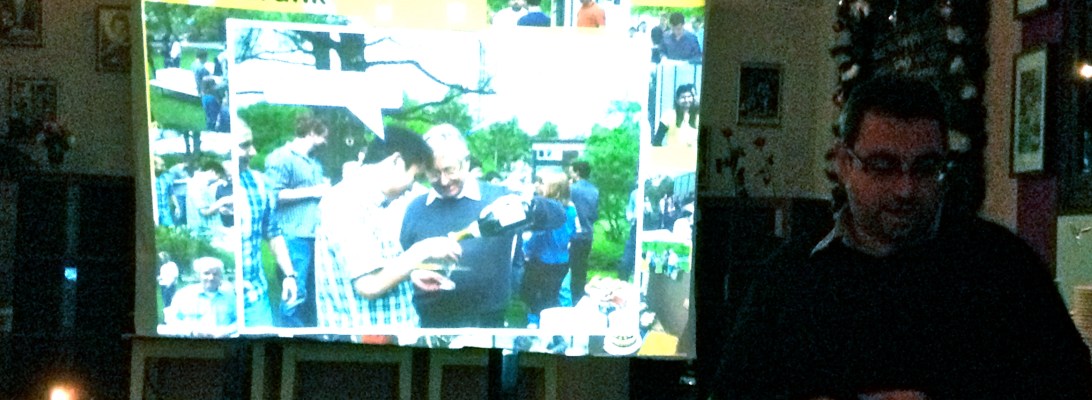
The latest and biggest news in the department is our director, Prof. Vasilis Ntziachristos, winning the Gottfried Willhelm Leibniz Prize 2013. A big congratulations on winning the highest German research prize! The Deutsche Forschungsgemeinschaft (DFG), which is the German Research Foundation have decided to give out 2.5 million euros to spend on research within the next seven years.
Having briefly spoken to Prof. Vasilis at our IBMI christmas work party, he told me he has spent a great deal of time researching in Germany, thirteen years in fact. He holds the Director position at the institute since 2007 and he is originally from Greece. I avoided any sort of mentions might involve me struggling to say his surname and tuned in for any conversations that might involve someone else pronouncing it, but alas- no echo! The presentation before we proceeded to dinner highlighted achievements and acknowledged new students and staff. Yey, my name was on it! With him awarding “Secret Kiss Award”, “Open Kiss Award”, “Rise to the Challenge” and “Most photogenic” followed with some comical pictures, told me he has plenty of good humour to go around.

Going back to the more relevant note, Prof. Vasilis have won the award for his international major contribution in optimal imaging and for laying new and fundamental methods for non-invasive application of optical methods in medical research. This for example means, looking at larger dimensions or the entire body of mammals in order to study and really understand specific biological processes to its core. He introduced and developed ground breaking work on new tomographic methods which led to more careful cancer treatment for patients. His high achievements in Molecular Imaging means that we can see and follow the distribution and effects of drugs in the body in real- time. In turn, study molecular processes in tumours and its surrounding tissues. Not only do we see and can differentiate between tumours and healthy cells but also remove malignant tumours selectively. Ultimately, giving us information a step closer on how to alleviate cancers as well.
At the IBMI, we are focussing on developing new techniques and methods appropriate for clinical imaging purposes with the goal of propagating these new technologies into healthcare.
Probing is imaging, imaging is seeing and seeing is believing!
Heads up for the BioYorkshire 2012 event today who brought together business focused academics, industries and government from Yorkshire, UK BioTech and Life Science disciplines. The main purpose of the gathering was to deliver the latest design and development of new technologies that is out there in the field of Healthcare, Medical, BioTech, BioPharma and Life Sciences. What a great way to network, find potential customers and research partners. From my point of view, it would have been interesting to learn about the transition between how an idea came about and bringing this into successful and innovative SMEs.
As I’ve known about this for a few days now, I will be a little quicker on the updates the next time!
Anyone went!?
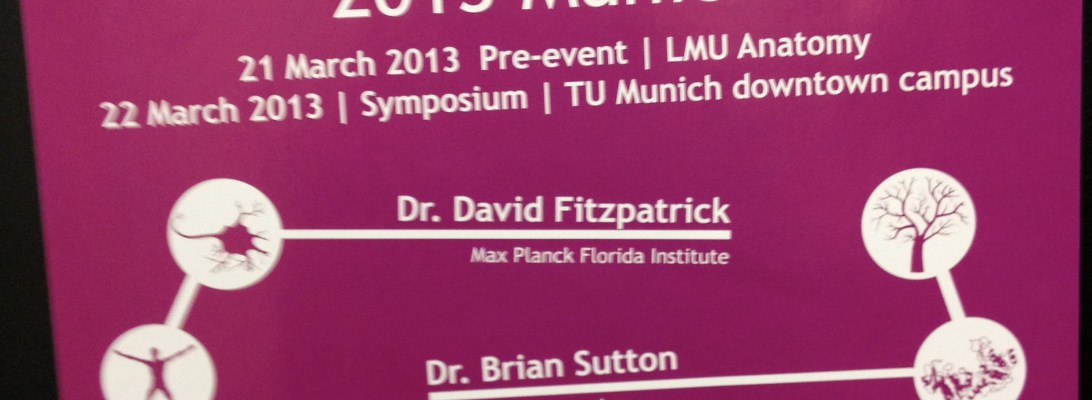
Be part of <interact 2013> Munich and join the young life sciences community from all walks of life with the main event on the Monday, 22nd of March, downtown TUM. This symposium I was made aware of today and it looks life it’s gonna be a great way to keep up to date on what everyone else’s up to in the city. From looking at the website, there seems to be an opportunity to submit a poster & talk. So if you’re interested, check out the specific topic requirements under ‘guidelines’ and happy submitting!

I don’t know about you but I’d be pretty much interested to hear what Prof. Jean Beggs from the University of Edinburgh has to say. She is an inspirational woman who has received a number of prestigious awards for her contribution to Science. In particular, adding new depths and dimensions to mRNA splicing. This has obviously nothing to do with what I’m doing but I’m nosy. Plus she’s from Scotland. If this is not for you, just go anyways, you’re free pens and goods awaits you…
Maybe see you at the conference!

 Roberts Lab